
Wu Yanghua 伍扬花
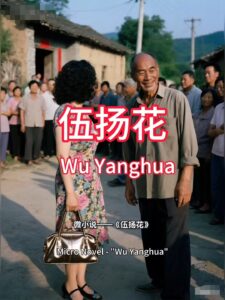


When San Tuzi brought Wu Yanghua back from Jiangnan, the whole village came out to see. Her hair was permed, she wore a floral dress that city people wore, and she carried a shiny leather bag. Standing at the village entrance, she looked like a peacock that had strayed into a chicken coop. San Tuzi walked ahead with a dark face, not saying a word.
Wu Yanghua was originally surnamed Wu, from a neighboring township. She was the youngest of five children. She learned early that good food and new clothes never came her way—she had to work in the fields like the boys. But she refused to accept it. As a child, she swam with the boys in the river. She was so skilled in the water that she could dive under and surface far away, leaving others trailing behind. Her playmates joked that she drifted like willow catkins on the water, going wherever the current took her, so they called her “Yanghua”—drifting blossom. She was the fifth child in the family, so the villagers also called her “Fifth Yanghua.” Over time, it became “Wu Yanghua.” A fitting name—willow catkins on the water, drifting wherever the wind blows.
In middle school, she bloomed. Her features turned delicate, her waist soft—like a wheat stalk just beginning to head. Love letters flew at her like snowflakes. She neither refused nor accepted, keeping the boys dangling. Eventually, two of them got into a fight over her, bloodied each other on the playground, and caused a scandal that shook the whole school. Her father went with a stick and brought her home. School was over for her.
She married San Tuzi through the introduction of his third sister. On her wedding day, she passed the village river and glanced at the water, saying nothing.
At the time, San Tuzi worked at the supply cooperative—the most respectable job in the village. After Wu Yanghua moved in, life was sweet. She dolled herself up every day—hair slick with pomade, face powdered white as snow, lips painted red like fresh blood. The villagers called her “the witch” behind her back. There was meat and fish at every meal. In those days, ordinary families couldn’t even afford white rice every day—breakfast and dinner were dried sweet potato corn porridge, lunch was barley rice. But in her house, when she didn’t feel like cooking, she’d pour high-proof liquor into nearly ten cups to use as alcohol stoves for cooking, lighting them one by one, the blue flames leaping high.
She also urged San Tuzi to use public funds to buy bricks, cement, and sand, planning to build a brick house. Back then, every house in the village was mud-walled with thatched roofs. Standing before that pile of building materials, she felt she was about to live like a lady of the manor.
But the good times didn’t last. San Tuzi’s embezzlement was uncovered. The cooperative demanded they return the money or face charges. The couple panicked, sold off the materials overnight, and lost everything. San Tuzi was fired and became a “tainted man.”
Wu Yanghua refused to accept defeat. She found a new line of work—matchmaking. The village was full of bachelors, desperate as ants in a hot pan. A young man named Mu Zisan came to her, and Wu Yanghua swore she would find him a wife. Grateful beyond words, Mu Zisan worked her land for free—harvesting wheat, planting rice, reaping grain—for the better part of a year, without ever seeing so much as a shadow of a wife. Later, Mu Zisan married a girl from a neighboring village and took the long way around whenever he saw Wu Yanghua.
Then Wu Yanghua went to Jiangnan. The outside world mirrored back her restlessness. Standing by the river, watching the water roll endlessly, she felt she was meant to drift farther. Soon men gathered around her. Two coworkers got into a fight over her—this time the police got involved. After mediation, they called San Tuzi to take her home.
After a brief lull, she went to another city, where she attached herself to a small factory owner and moved into his house. Back home, she boasted that the boss bought her clothes, that he was such a kind man. “How rare,” the villagers said with a smile. “Buying clothes for his employees—what a generous boss.”
After Erxiang died, Wu Yanghua was like a cat that smelled blood. The Erxiang family had always been better off than hers, and she’d never swallowed that envy. Now that he was gone, she wanted to see how much longer they could hold their heads high. For days on end, she called Erxiang’s widow, asking how much money Erxiang had left behind, how much the funeral cost, how much gift money they’d received. Then she fanned the flames: “Your son doesn’t treat you well, does he? Maybe you should talk to his uncle about it.” She also bragged about how wonderful her own son was—this at a time when San Tuzi had just been in a fistfight with their younger son, black and blue.
The couple sang a duet, cursing Erxiang’s son on the phone as if the young man had desecrated their ancestors’ graves.
Not long ago, Erxiang’s son was scrolling through videos when he came across an old woman with permed hair, wrinkles piling up, sharp-faced and pointy-chinned, her face powdered ghost-white, her lips crimson, twisting and writhing in front of the camera. It took him a moment to recognize her—Wu Yanghua. The face on the screen drifted like scum on the river, stinging his eyes.
He left a few words in the comments. Then he put down his phone.
Outside the window, the river still flowed. The water was murky, its depth impossible to see.
伍扬花被三秃子从江南领回来的时候,村里人都来看热闹。她烫着卷发,穿着城里人才穿的花裙子,拎着个亮闪闪的皮包,站在村口像只误闯鸡窝的花孔雀。三秃子黑着脸走在前面,一句话也不说。
伍扬花本姓吴,邻乡人,家里五个孩子她排老幺。她从小就知道,家里好吃的轮不到她,新衣服也轮不到她,她得像男孩子一样下地干活。可她偏不认命。小时候,她跟男孩子一起在河里耍,水性极好,一个猛子扎下去,半天才从老远的地方冒出来。同伴们笑她像水里的杨花,漂来漂去没个定性,就叫她“扬花”。她在家里排行老五,村里人又管她叫“五扬花”。叫着叫着,就成了“伍扬花”。这名字起得巧——水性杨花,说的可不就是她。
初中时她长开了,眉眼水灵,腰身柔软,像棵刚抽穗的麦子。情书像雪片一样飞来,她不拒绝也不答应,把那些男孩子吊在半空。后来两个男生为她争风吃醋,在操场上打得头破血流,闹到学校满城风雨。她爹拎着棍子到学校,把她领回家。书是不用再念了。
经三秃子三姐介绍,她嫁了过来。出嫁那天,她路过村口的河,往水里看了一眼,什么也没说。
三秃子那时在供销社上班,是全村最体面的差事。伍扬花过门后,日子像抹了蜜。她每天把自己收拾得花枝招展——发油擦得锃亮,脸上粉拍得雪白,口红涂得像刚喝完血。村里人背后叫她“女妖”。家里顿顿有鱼有肉,那年月普通人家白米饭都不能天天吃,早晚红薯干玉米粥,中午大麦饭。她家倒好,不想烧饭时,把高度白酒倒到近十个杯子里当酒精炉子烧饭,一杯一杯点过去,蓝火苗蹿得老高。
她还鼓动三秃子挪用公款买砖头水泥,准备盖砖瓦房。当时村里清一色土坯稻草房,她站在那堆建筑材料前,觉得自己马上就要过上地主婆的日子了。
可惜好景不长。三秃子事发,供销社让他们退赃,否则报案。两口子吓得连夜转卖材料,赔了个精光。三秃子被开除,成了“不干净的人”。
伍扬花不甘心。她发现了一条新路子——说媒。村里光棍多,个个急得像热锅上的蚂蚁。有个叫木子三的后生找上门,伍扬花拍着胸脯说包在她身上。木子三感激涕零,从那天起,伍扬花家的地他包了——收麦子、插秧、收稻子,忙活大半年,连个媳妇的影子都没见着。后来木子三娶了隔壁村的姑娘,见了伍扬花绕着走。
后来伍扬花去了江南。外面的世界像一面镜子,照出了她的不甘。她站在江边,看水流滚滚,觉得自己就该往更远的地方漂。很快就有男人围上来,两个工友为她大打出手,闹进了派出所。警察调解完,通知三秃子把人领回去。
回来后消停了一阵,她又去了另一个城市,搭上个个体老板,吃住在人家家里。回来跟人炫耀,说老板给她买衣服,说老板人好。“难得难得,”村里人笑着说,“都给员工买衣服了,真是好老板。”
二祥死后,伍扬花像闻着腥味的猫。二祥家以前比她家过得好,她心里一直憋着一口气。现在人死了,她倒要看看这家还能风光几天。她连着几天给二祥嫂打电话,问二祥留了多少存款,办丧事花了多少钱,收了多少礼金。问完就开始拱火:“你儿子不孝顺吧?要不去他舅舅那告一状?”又夸自己儿子如何如何好。那时三秃子刚跟小儿子干过一架,鼻青脸肿的,她倒好意思说。
两口子一唱一和,在电话里把二祥儿子骂得狗血淋头,好像人家刨了他们祖坟似的。
前不久,二祥儿子刷短视频,刷到一个老太太,满头卷发,皱纹一堆,尖嘴猴腮,脸上粉白得吓人,嘴唇血红,对着镜头扭来扭去。他愣了半天才认出来——伍扬花。屏幕里那张脸,像河面上漂着的浮沫,晃得人眼睛疼。
他在评论区留了几个字。发完,关掉手机。
窗外那条河还在流。河水浑黄,看不出深浅。
#伍扬花 #乡土文学 #人性 #虚荣 #微型小说 #WuYanghua #RuralStory #HumanNature #Vanity #FlashFiction #VillageLife #ChineseFiction #Matchmaking #Restlessness #Irony #FashionTextile #knitwarp #knitweft #textile #victory #knitfabric #fabric #victorytex #victorytextile #suzhouvictorytextile #suzhouvictorytextilecoltd #维特瑞纺织 #苏州维特瑞纺织 #苏州维特瑞纺织有限公司
Suzhou Victory Textile Co., Ltd. (苏州维特瑞纺织有限公司)is located in Changshu city(belongs to Suzhou District) Jiangsu,China. 80 Kilometers away from Shanghai Port.
Our team has been working in textile over 18 years.Our mainly products are Tie dyed Fabric,Velour/Velvet,Quilt Fabric,Jacquard Fabric,Single Jersey, Pique,Rib Fabric,Bird Eyes/Mesh Fabric, Interlock, French Terry/Fleece, Polar Fleece, Coral Fleece, Flannel Fleece, PV Plush, Sherpa Fleece,Coarse Needle Fabric etc Fabrics.
Compositions include Polyester,Cotton,Spandex/Lycra,Nylon/Polyamide,Rayon/Viscose,Modal/Tencel,Bamboo,Arcylic,Soybean,Wool,Flax/Linen,etc.
Functional Fabric:Sportswear Fabric(Coolmax,Coolpass,Coolplus,X-dry,Cooldry,Feelcool Ice,Topcool,Sorona,Supplex etc.),Waterproof,Fireproof(Aramid,Polyimide),Heat(Thermolite),Antibiosis(Sanitized),Uvioresistant,Radiation-proof,Recycle,BCI,Organic,Pima/Supima etc Fabrics.
We also have invested a home textiles & garments factory where we move our fabrics to sew many kinds of Garments, blankets etc.
Our marketing team and QC department are checking all the day in every process and keep close contact with customers to make sure customer knows every stage of the production. All the fabrics and blankets are inspected by our QC before packaging and shipping. Also we can provide some certifications Such as Oeko-Tex standard 100, SGS, Intertek etc.
We have production capability 5000 tons of various type of fabrics annually.Our products are mainly transported to China, southeast Asia, Middle East, Europe and America etc.
Welcome to our company. We will highly appreciate any inquiry and question from you and respond asap.We believe you will enjoy one-stop service from us if you work together with us.